The finest range of gardening and outdoor leisure goods, GoneGardening YellowPetal, Same day fresh flowers for all occassions.
 
   
Information
 
Journal

Tasks

Tips

Library

Glossary

Contact us


Gardening for Disabled People - Planning a garden for wheelchair access


Planning a garden for wheelchair access

We are not necessarily looking at the planning of a garden from scratch but maybe to improve our existing garden to enable us to enjoy it using the disability aids available to our particular circumstances. As we know, so much pleasure and enjoyment can be achieved by having a garden which we can both be fulfilled and enjoy at the same time.

When planning or adapting a garden for wheelchair access we may not be able to choose our site but are normally restricted to what areas are available to us. In most cases the area is not at all large enough to make full use of the space required and therefore we have to work within the constraints imposed upon us. For instance, the requirement of wider paths in a very small garden produces all paths and very little gardening area. However, with careful thought and planning we can use the resources available to our best advantage.

Quite often, keeping the design simple is the best answer and of low maintenance design. We do not necessarily only want to concentrate on wheelchair users but all those who are older or have a hard time getting about in a garden. Be realistic about the amount of work and energy that you are able to expend. Adding facilities to your garden i.e. a water feature or a bird table can enhance the appearance without deterring from the gardening aspect. The provision of seating is an advantage so that the gardener and friends can relax and enjoy it.

Paths

It is necessary to give due consideration to the materials, widths and curves of paths. The size and length of our wheelchair is a critical factor and the turning circle required. It is not normally necessary to provide enough width for two wheelchairs to pass in a private or house garden but it would be advantageous for the width to accommodate a wheelchair and for a pedestrian to pass or walk alongside. Therefore, taking into consideration turning the wheelchair around will generally necessitate a width of about 2 metres. This maybe rather wide for the smaller garden. It may be more suitable to provide a turning circle at one end to lessen the general width of the paths and provide more gardening space.

Edging to paths would prevent wheelchairs from going into the soil with the possibility of tipping over. Concrete path edging can be obtained from the GoneGardening.com shop. Non-slip surfaces of paths reduce the chance of accidents. Loose surfaces such as pea gravel and shingle are not usually suitable for wheelchair users. Grass paths tend to become awkward when wet and quickly turn to mud. If using concrete slabs or brick surfaces, time and care must be taken at the foundation stage to avoid uneven surfaces due to ground settlement which tend to leave projecting edges. If using a plain concrete path ensure that the surface is roughened before it sets to provide a non-slip surface. Slope the surface gradually to the sides to prevent standing water on the path.

Garden Beds

Design the beds for easy reach, generally no more than one metre deep. A garden does not necessarily have to incorparate a lawn where grass has to be continuously cut during the summer months. We have discussed the use of raised beds in our last feature and these can be adapted to our particular garden in different shapes and forms with various construction materials.

Take time to consider the placement of plants in your garden. The taller plants being positioned at the rear of the bed but still within reach to attend to them. Bark chippings may be useful for deterring the weeds and lesson the work load. Also, consider the aspect of light and shade and protection from prevailing winds. Scented plants and fragrant flowers increase the interest in the garden to give a more complete feel. Incorporate roses, lavender or aromatic herbs to increase the enjoyment.

Tools

It is beneficial to have the storage of tools as near to the garden as possible. If the garden is a distance from the house it is usually a good idea to provide a small shed or storage box within the garden to avoid having to carry these for use. Refer to our feature in the library on tools for the disabled to help you have the correct tools at your disposal.

Watering

One activity to take into consideration is that of watering. Plants need water - some plants are made up of about 90 per cent water. Water is essential for seeds to germinate and plants to grow and we cannot always rely on the rainfall to supply all the plant needs at the right amount and at the right time. As mentioned previously, gardens can be of various sizes. With a small garden the hose pipe may be quite sufficient.

It is an advantage to make sure that the source of water is as near to the beds as possible to avoid trailing hose pipes which produce a hazard on paths. Make sure that there is a shut-off valve at the end of the hose for easier handling. With a larger garden it may be more beneficial to use a portable sprinkler where you can place it where it is needed, turn it on and go and do something else. Alternatively, a permanent irrigation system either over or under-ground can be installed which obviously may be the more labour saving system for those with very limited mobility. Needless to say that it may be the more expensive.
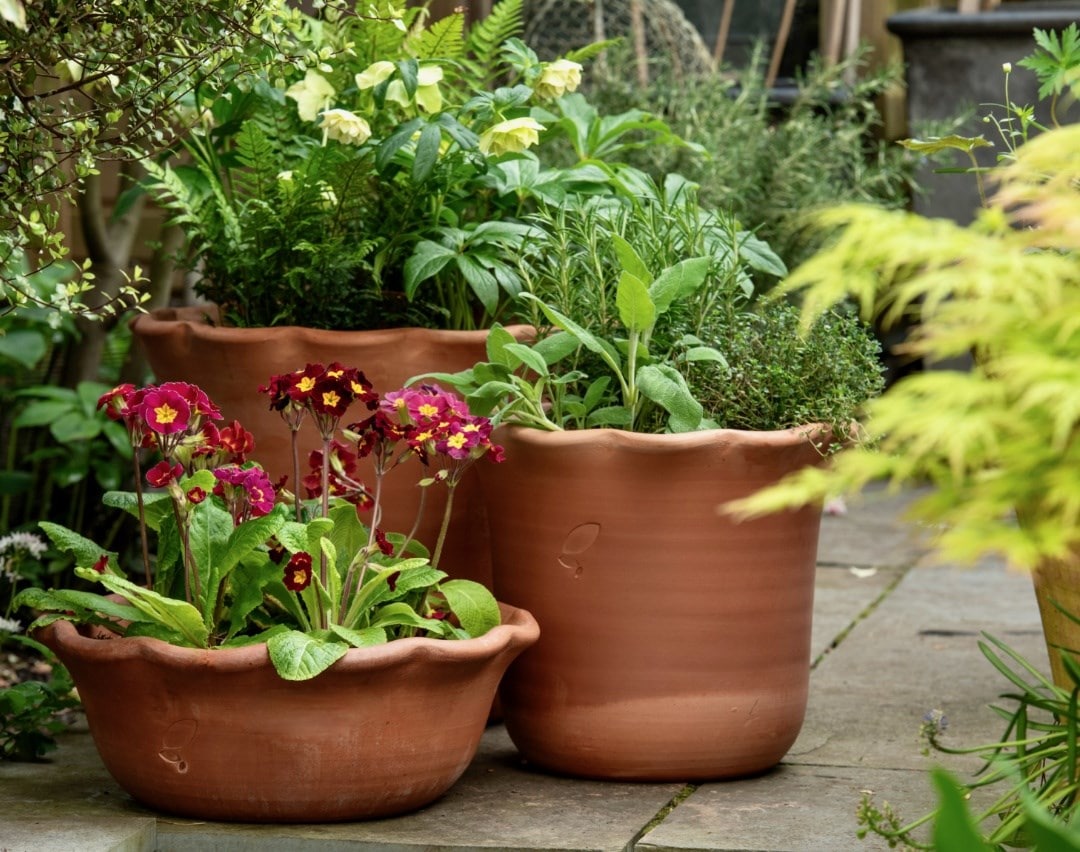

Whatever the result, there is no reason why gardening cannot be a pleasure to you and your friends to relax and enjoy no matter what size of area we have available.


Planning a garden for wheelchair access

Raised beds

Therapeutic Horticulture - Part 3 (A Quality of Life)

Therapeutic Horticulture - Part 2 (A Living Example)

Therapeutic Horticulture - Part 1


Copyright 1999-2007, Crocus.co.uk Limited.
GoneGardening is a trading name of Crocus.co.uk Limited
For delivery to the United Kingdom mainland only.
Security guarantee : Online Privacy Practices : Terms and conditions of sale : About us