|
Plants for a Shady Garden - Part 1
The more you garden in the shade, the more you will come to appreciate the range of possibilities. There is as much pleasure to be gained from a shady patch as a sunny one. Once you discover the large range of suitable plants, you might even come to prefer shady gardens.
Is there a shady patch in your garden? Would you like to discover interesting plants that will grow in the shade of a fence, or under shrubs and trees? There are special plants for sandy, clay or peaty soils - in damp shade or dry shade. And yet other plants that thrive best in partial or full shade. Is there a shady patch in your garden? Would you like to discover interesting plants that will grow in the shade of a fence, or under shrubs and trees? There are special plants for sandy, clay or peaty soils - in damp shade or dry shade. And yet other plants that thrive best in partial or full shade.
A garden that looks good in all seasons, that is the aim - and part of the art of gardening. Evergreen shrubs make shapes that are of architectural interest in every season. Viburnum farreri (for partial shade) is a deciduous shrub with strongly fragrant pink to white blooms. But V. burkwoodii produces white scented flowers in spring and keeps its leaves all year. Both are recommended.
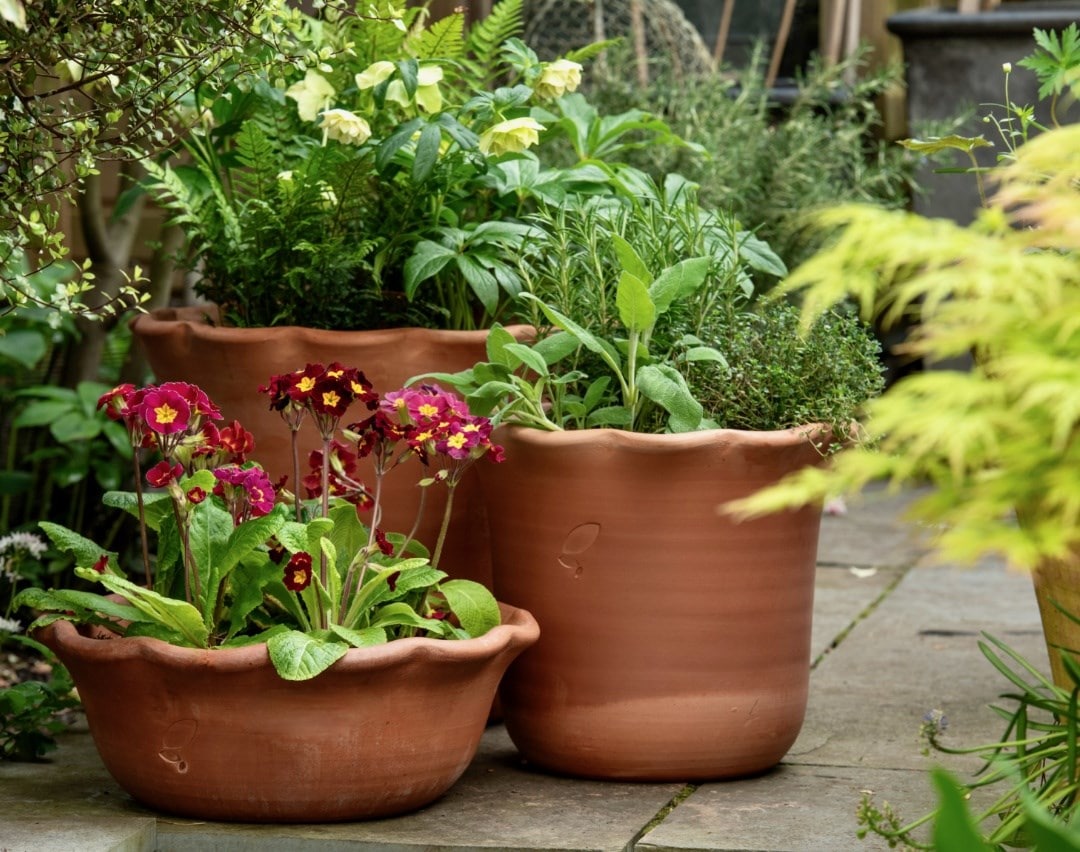
Other shrubs bear both flowers and berries – scented, evergreen Sarcococca grows well in half shade. There are black-berried sorts and a red-berried one. S. confusa and S. hookeriana have black berries, while C. ruscifolia is red. (Look here for colour combinations of leaf, flower and berry next month).
Start with easy to grow plants.
Once the background is right everything else seems to fall into place easily. For a shady fence, the common ivy Hedera helix can form a dark green backdrop like a curtain. Luckily, ivy will grow in fairly deep shade. And I find that many of the tiny-leaf variegated cultivars - such as ‘Eva’ – still keep their colour in half shade. Bird’s-foot ivy, with its long pointed centre leaf lobe, makes interesting dark patterns up old crab apple trunks. I began my gardening in the shade with variations on Heuchera, Hosta and Hypericum, with forget-me-nots and honesty self-sowing like weeds - yet still welcomed by me. Then I discovered the delights of Bergenia and Pulmonaria. While species of Primula and Cyclamen have long provided additional colour, fragrant plants have become increasingly attractive.
To grow beside walls or under trees, consider Cyclamen hederifolium – this is the easiest species for dappled shade. White and pink-flowering plants form carpets of colour. Their fat seed capsules are ripening now and the new season buds will begin to unfold in late July. Did you know that it is possible to have a succession of cyclamen species in flower all year in Britain? The summer-flowering C. purpurascens will thrive outside in the garden, flowering in June . I cherish the silver-leaf variety ‘Limone’ – cultivating it in clay pans.
Lily-of-the-valley is delightful – and fairly dense shade is tolerated. The wonderful perfume in May makes this a favourite for woodland areas of gardens. In smaller gardens it may be planted beside a hedge, a shrub, a step or a path.
Making use of space
In summer, scrambling over fences and tumbling over low walls, Jasminum officinale will produce its fragrant, white flowers in half shade. There is a sought after variegated form J. officinale ‘Argenteovariegatum’. And, although not scented, the yellow-flowering J. nudiflorum also tolerates half shade here and blooms in winter, which is a bonus.
Groundcover plants
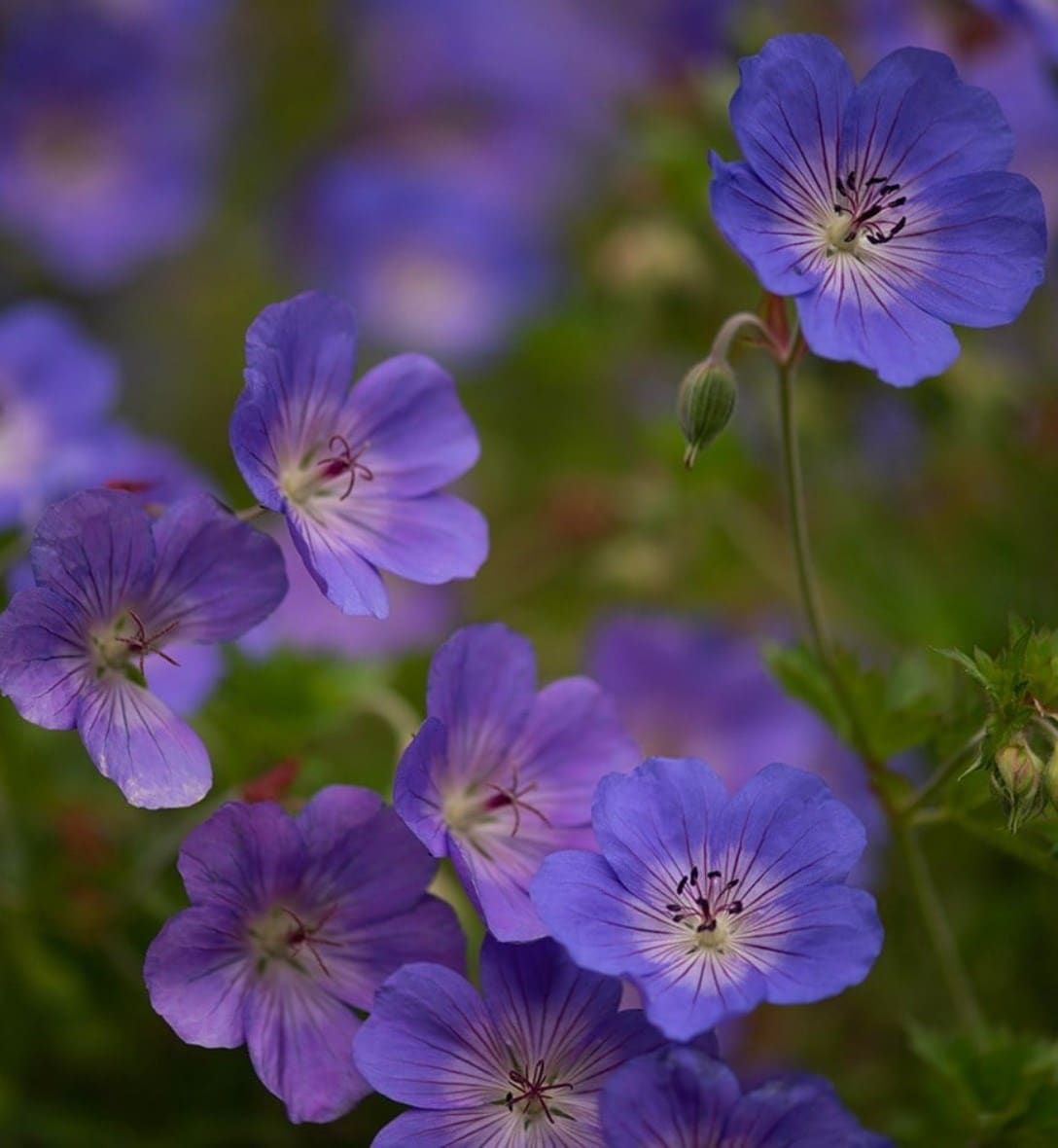
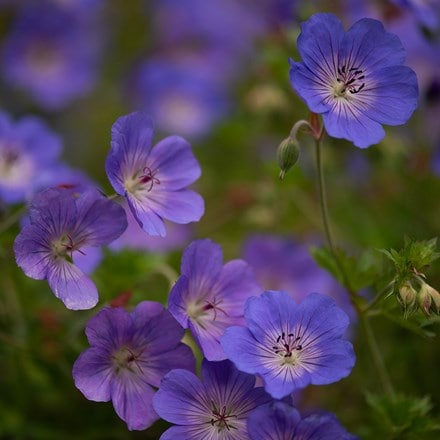
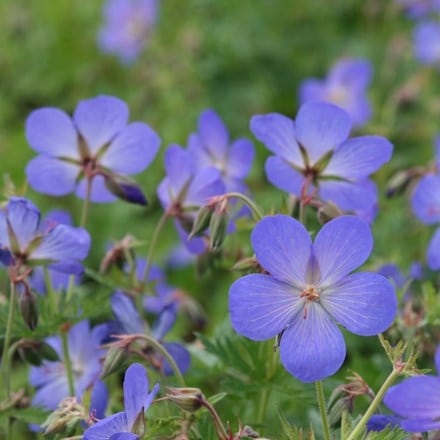
Hardy geraniums flower in summer. G. x oxonianum ‘Wargrave Pink’ is often recommended for sun, but will also form a bank of flowers in the shade (note: the species cross name is up to date! - checked with Wisley) and there are many other species of geranium. Periwinkle is another summer-flowering plant - Vinca minor, with small blue flowers, forms low ground cover of dark green leaves V. major ‘Variegata’ bears large blue flowers in the shade.

|